

Insulating Downlights using LED lighting

Insulating Downlights using LED lighting
Insulating downlights using LED lighting instead of the halogen variety from a safety perspective can become a legal issue when used with a combination barrier, and it’s critical to ask your LED manufacturer whether they can be covered with a quality downlight cover. With the advent of LED lighting, insulating downlights with clearances of 200mm can now be a thing of the past, as most LED manufacturers now recommend less clearance of insulation. On this page we cover thermal imaging comparisons of a living area with clearances and LED lighting without clearances, using a thermal downlight cover.
With the introduction of IC Rated LED Downlights, they can now be covered with insulation without question. Well, not completely without question… Even though a LED advertises an IC rating, they have not been tested for their lamp life under insulation. So, it is still recommended to keep these electrical devices as cool as possible.
For more information on insulation while only replacing an MR16 LED globe click here.
Examples of insulation clearances
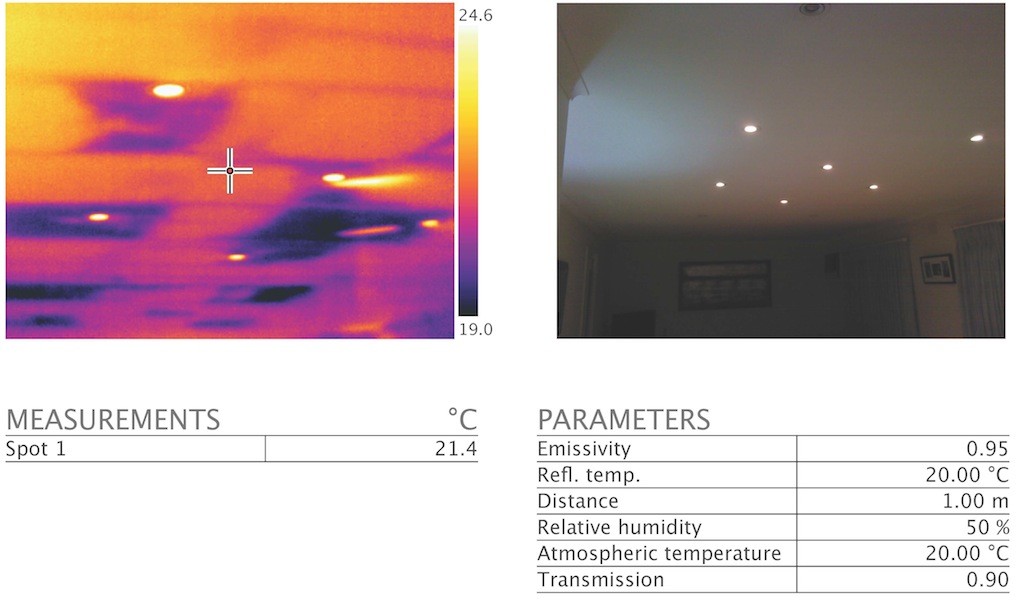
Thermal Image 1
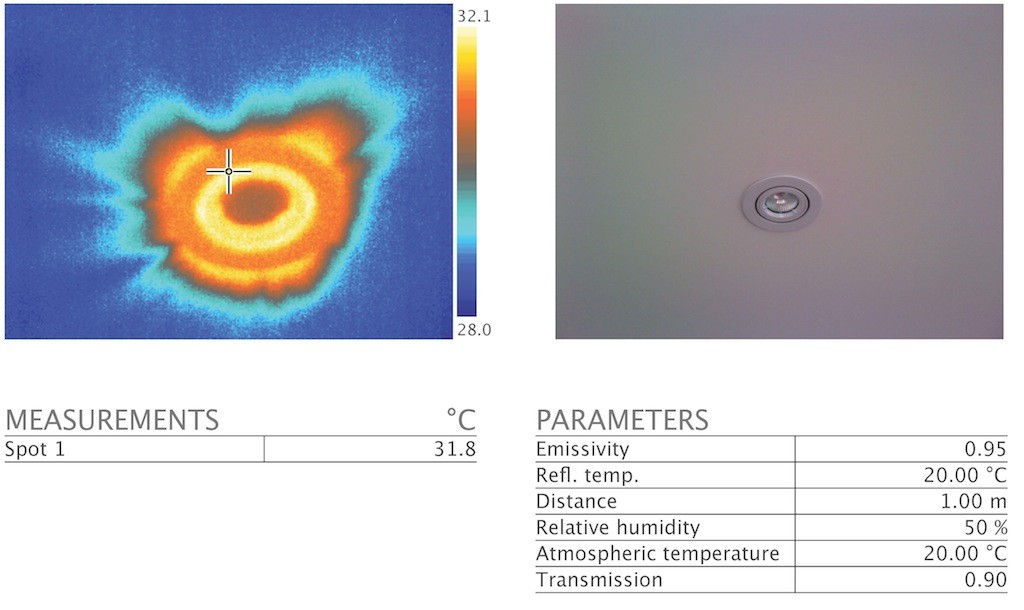
Thermal Image 2

Thermal Image 3
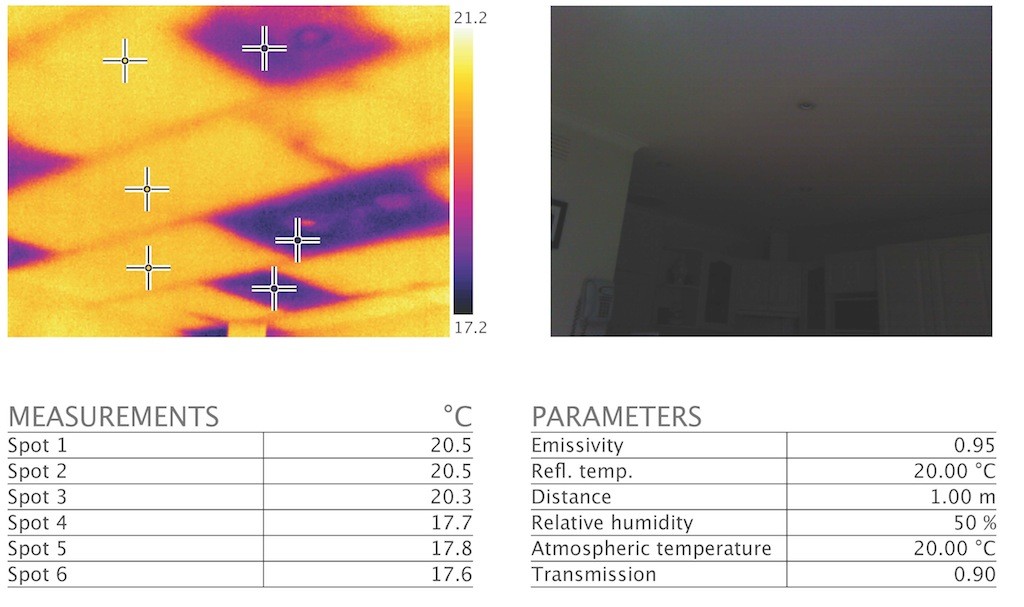
Thermal Image 4
Thermal Image 1 – Here we have downlights turned on, and control gear, which is resting on the roof, is radiating its heat into the living area.
Thermal Image 2 – Air leakage through a recessed light during summer. House is being negatively pressurised to create this effect.
Thermal Image 3 – In this thermal image taken, all downlights are gimble fittings, so they contribute to draught effect. It can very clearly see thermal bridging due to outside cooler temperatures radiating into the living area.
Thermal Image 4 – Again, insulation clearances are bypassing the thermal R-value of the insulation installed, here there is a 3-degree difference in temperature between non-insulated roof spaces compared to insulated.

To kick this analysis off, here is a living area image of a downlight not covered and another with an insulative downlight cover. Downlights are usually made out of steel and plastic, and both these materials have a very low R-value, in fact, metal/aluminium are super efficient conductors. Having 40 LED downlights in your home whether they are ventilated or not is the same as having 40 heatsinks built into your ceiling that make it harder to reach and maintain your desired temperature in the building. In this image, both LEDs were not connected, so the heating system is creating the temperatures measured.
Utilizing an airtight insulative downlight cover with a well-ventilated gimble fitting is very effective at protecting LEDs from extreme roof area temperatures which can reach temperatures of up to 65˚C

Thermal Image 5

Thermal Image 6
Thermal Image 5 – Thermal imaging of a non-insulated roof, comparing an R-3.5 Batt with the Efficiency Matrix Loft Mitt Product.
Thermal Image 6 – Same image as Thermal image five completely insulated with R-3.5 Batts showing the thermal performance of the ceiling with the Loft Mitt installed over the gimble downlight fittings. In both pictures, fittings have been retrofitted with 5W LED globes.
Gimble Downlight Fittings with LED recessed downlights
During summer, Loft areas can get scorching hot. Having a well-ventilated fitting while insulating downlights with a good quality airtight downlight cover enables the LED luminaire to slowly mix with living area air to dissipate its heat into while also shielding your living area and LED from the extreme temperatures. Although LEDs produce way less heat than halogen lighting, they are more susceptible to failure when operating in extreme temperatures. Good quality LEDs can handle overheating better than cheaper models, ask your LED manufacturer regarding these limitations. If a LED manufacturer says that you can cover the LED with insulation, be sure to keep your receipt in a safe place in case of premature failure. All LEDs that say they can be covered have not been tested for lamp life longevity operating under insulation.


